
Sant Joan de Déu coordinates the European project AriChall to promote a new clinical trial in pediatric leukemia
Sant Joan de Déu coordinates the European project AriChall, an international initiative that promotes a new clinical trial with the aim of identifying a treatment for children with acute lymphoblastic leukemia (ALL) in first relapse through the CAR-T ARI-0001 therapy.
Acute Lymphoblastic Leukemia (ALL)
Acute lymphoblastic leukemia (ALL) is a blood cancer that affects lymphocytes, a type of white blood cell, and originates in the bone marrow. It is the most frequent cancer in childhood. Thanks to current treatments mainly based on intensive chemotherapy, between 80 and 90% of children can be cured. However, when a first relapse occurs, the chances of cure decrease significantly, especially in cases of early relapse or with certain genetic alterations, which makes the development of new more effective and less toxic therapeutic options essential.
CAR-T ARI-0001
The CAR-T ARI-0001 therapy was initially developed by Dr. Manel Juan for the treatment of adult patients at Hospital Clínic de Barcelona, with the collaboration of Sant Joan de Déu for pediatric patients. It is the first CAR-T cell therapy fully developed academically, entirely produced in Europe for clinical application and approved by a regulatory agency. Currently, this cellular product is authorized in Spain by Agència Espanyola del Medicament i Productes Sanitaris (AEMPS) under the Hospital Exemption Clause for adult patients with refractory or relapsed ALL.
In Spain, SJD Barcelona Children's Hospital already has 30 pediatric patients in phase II treatment with CAR-T ARI-0001, within the framework of a trial initiated in 2023 thanks to funding from a grant from the Instituto de Salud Carlos III and the donation of the family of Ariana Benedé (for phase I), a patient with acute lymphoblastic leukemia initially treated at Sant Joan de Déu and subsequently at Hospital Clínic after a relapse.
European clinical trial led by the Clinical Research Unit of SJD Barcelona Children's Hospital (HSJD)
Now, within the framework of this new European trial, Sant Joan de Déu will incorporate 10 more patients, so that the total number of participants in Spain will rise to 40 children, adding the patients who are already in phase II and those who will now start treatment. At European level, there will be a total of 70 children, all in first relapse. At this moment, SJD Barcelona Children's Hospital is already manufacturing CAR-T ARI-0001 at its Advanced Therapies Platform.
The clinical trial, led by the Unitat de Recerca Clínica de l'Hospital Sant Joan de Déu (HSJD), aims to expand the clinical evaluation of this innovative therapy in the pediatric population in order to meet the requirements established by the European Medicines Agency (EMA) within the framework of the Pediatric Investigation Plan.
One of the major milestones of the AriChall trial will be that CAR-T ARI-0001 will be manufactured not only in Spain, but also in the hospitals of the other four countries involved, which will allow the creation of a European network of centers that collaborate and produce advanced therapies. This may be a first step for the development of new therapies from the academic field aimed at patients with rare diseases (as all cancers in childhood are).
"Acute lymphoblastic leukemia is nowadays a highly curable cancer in most children, but when a first relapse occurs the prognosis worsens significantly. With this clinical trial we want to offer a new therapeutic opportunity to these patients, evaluating the efficacy and safety of CAR-T ARI-0001 in the pediatric population and moving towards more personalized, effective treatments with less toxicity," explains Dr. Susana Rives, principal investigator of the project, researcher of the Pediatric Leukemia and Blood Disorders research group at the Sant Joan de Déu Research Institute (IRSJD) and pediatric hematologist at SJD Barcelona Children’s Hospital (HSJD).
A clinical trial promoted by European foundations against cancer
The AriChall clinical trial is part of the ATTRACT 2025 call, promoted by six European cancer charities that have joined forces to stimulate international research in the treatment of rare cancers. The promoters are the Asociación Española Contra el Cáncer (Spain), Anticancer Fund (Belgium), Fondation ARC (France), Kom op tegen Kanker / Kom Cancer Society (The Netherlands) and, in this new edition, the Rising Tide Foundation for Clinical Cancer Research (Switzerland).
The study is also funded in Spain by the Bosch Aymerich Foundation with 200,000 euros that will allow the expansion of the number of participants by 3 more patients.
With the coordination of the AriChall project and this new European trial, Sant Joan de Déu reaffirms its commitment to European collaborative research and innovation in advanced therapies, while strengthening its leadership in clinical research and consolidating its role as a coordinating center for international projects aimed at responding to still unmet medical needs in pediatric oncology, with the objective of improving therapeutic options for children with cancer and putting science at the service of patients and their families.
Presentation of the AECC grants for cancer research
In this context, today February 26, the Asociación Española Contra el Cáncer (AECC) organized in Barcelona the presentation event of the new cancer research grants awarded in 2025, in which the AriChall project was recognized as a beneficiary initiative. The event took place at the MGS Auditorium and was a day to highlight cancer research and recognize the selected research teams.
Within the framework of this same AECC 2025 call, the researcher from the Institut de Recerca Sant Joan de Déu (IRSJD) Victoria da Silva-Diz has also received a grant to promote the project "Metabolism and immunity: in search of new therapeutic targets for childhood leukemia". Her study focuses on T-cell acute lymphoblastic leukemia, a particularly aggressive form of the disease, and will analyze how leukemic cells use nutrients from their environment to survive, expand and escape from the immune system.
The objective is to identify specific metabolic vulnerabilities and develop new therapeutic strategies that allow restoring or enhancing the immune response, with the aim of offering more effective alternatives for pediatric patients with poorer prognosis.
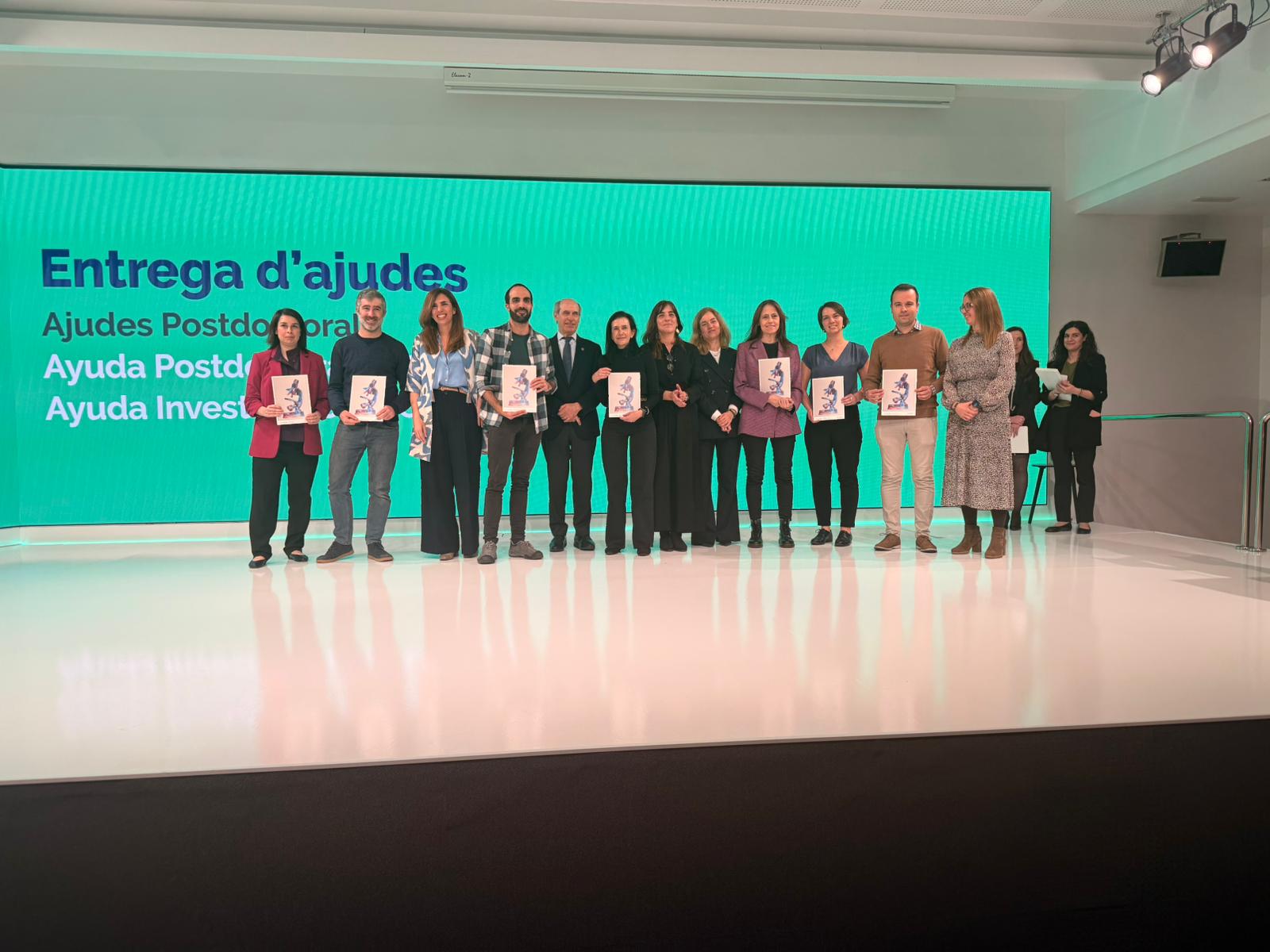
With the coordination of the AriChall project and this new European trial, Sant Joan de Déu reaffirms its commitment to European collaborative research and innovation in advanced therapies.