
An international social skills program adapted to the public network shows benefits in children with autism
A research team led by the autism unit (UnimTEA) at SJD Barcelona Children's Hospital and the Research in Child and Adolescent Mental Health research group at the Institut de Recerca Sant Joan de Déu (IRSJD) has obtained promising results on the feasibility of an adapted social skills programme for children and adolescents with autism within the public mental health system.
The study Bridging research and practice: a pilot trial of an adapted social skills program for autism in public services, published in Frontiers in Psychiatry and led by Sant Joan de Déu, in collaboration with researchers from Blanquerna-Universitat Ramon Llull and the UC Davis MIND Institute, shows improvements in certain aspects of social communication in some subgroups of participants, as well as changes in emotional symptoms that will require further investigation. The findings reinforce the importance of bringing evidence-based interventions into routine clinical practice and generating knowledge about the real-world impact of clinical adaptations implemented within public mental health services.
Social Adjustment Enhancement Intervention (SAEI)
The study evaluated an adapted version of the Social Adjustment Enhancement Intervention (SAEI) programme, a group intervention originally developed by the MIND Institute at the University of California, Davis, aimed at children and adolescents with autism spectrum disorder and difficulties in social communication. The programme focuses on skills such as reciprocal conversation, cooperative play, emotional recognition, and social problem-solving through practical activities and guided peer interactions.
The intervention shows particularly significant benefits in eye contact and functional communication among younger children and those with higher verbal abilities
The research at Sant Joan de Déu was conducted through a randomised clinical trial involving 79 participants aged between 8 and 17 years, who took part in a 10-session group intervention. Researchers analysed aspects such as eye contact, functional communication, and associated emotional symptoms, including anxiety and depression. The results show particularly significant improvements among younger children and participants with higher verbal abilities. A reduction in internalising symptoms was also observed in children, while increases in anxiety were detected among adolescents, requiring further investigation.
According to the authors, the findings reinforce the importance of adapting interventions to the specific needs of each child and of transferring evidence-based programmes into the public healthcare network to ensure their accessibility by adapting them to healthcare settings with limited resources and time.
"This study shows that it is possible to bring evidence-based programmes into routine clinical practice within the public mental health system by adapting them to the real needs of children and adolescents with autism," says Dr. Aritz Aranbarri, researcher in the Salut Mental Infantil i Juvenil research group at IRSJD and co-author of the study.
Aranbarri also notes that the results show that social skills interventions may have a positive impact not only on interpersonal communication but also on the emotional well-being of children with autism. The study also highlights the importance of monitoring potential unintended effects of this type of intervention. Specifically, the adolescent subgroup showed increased anxiety levels, a finding that the researchers interpret as an important aspect to consider when adapting brief programmes to the public healthcare system.
The study also highlights the need for further research to optimise these types of interventions and to analyse their long-term effects, with the aim of improving the quality of life of children and adolescents with autism and their families.
The full publication is available in Frontiers in Psychiatry.
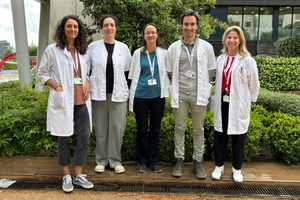
The findings reinforce the importance of adapting interventions to the specific needs of each child and of transferring evidence-based programmes into the public healthcare network to ensure their accessibility.