
The SEHOP-PENCIL project promotes precision medicine for all children and adolescents with cancer through a pioneering national network
More than 1,600 new cases of cancer are diagnosed in children and adolescents in Spain every year. Personalised medicine is essential to achieve the best outcomes for patients, as it makes it possible to study the characteristics of each tumour and identify alterations that can improve diagnostic accuracy and may be susceptible to targeted treatments. In this context, the SEHOP-PENCIL project has laid the foundations for the first national personalised medicine programme to facilitate access to the technologies needed to study the tumours of all patients, regardless of where they live.
The work, developed by the Sociedad Española de Hematología y Oncología Pediátricas (SEHOP), was coordinated by the Cáncer y Enfermedades Hematológicas Infantiles group at Vall d'Hebron Instituto de Investigación (VHIR), in collaboration with other institutions such as the Institut de Recerca Sant Joan de Déu (IRSJD). The efforts involved in launching the project are described in a recent publication in the journal JCO Precision Oncology.
SEHOP-PENCIL was launched in 2022 to address the existing differences in access to personalised medicine studies in Spain. The team based its work on a survey that analysed data on where these studies were being conducted and what types of technologies were being used, and differences according to the hospital were demonstrated. "When we launched the project, one of the main challenges was to ensure that access to personalised medicine technologies did not depend on where each patient received care," explains Andrea Vilaplana, a researcher in the Cáncer y Enfermedades Hematológicas Infantiles group at VHIR.
To address these inequalities, a coordinated working network was established, connecting more than 100 professionals from different disciplines at hospitals and specialised genomic centres across the country. SEHOP-PENCIL is a pioneering initiative in Spain that has been structured as a network of 10 specialised genomic centres coordinated through a centralised patient enrolment system that covers 45 hospitals. This collaboration has made it possible to share specialised knowledge, coordinate patient enrolment, address complex cases and harmonise procedures. Dr Cinzia Laverino, a researcher at the Institut de Recerca Sant Joan de Déu (IRSJD), has also participated in this collaborative effort, contributing to the joint work of the teams involved in the project.
As part of the project, joint work has been carried out to standardise and harmonise the different sequencing techniques in order to establish common criteria among the participating centres.
The study of cancer predisposition and collaboration to access targeted therapies
SEHOP-PENCIL has also contributed to coordinating studies on hereditary predisposition to childhood cancer. To this end, the inclusion criteria for predisposition studies have been reviewed to ensure that they are assessed consistently and systematically in participating patients. In addition, work is underway to develop national consensus recommendations and clinical guidelines for the diagnosis and management of these patients.
The recently published article also describes the creation of committees of professionals from different disciplines to analyse the results of genomic analysis and discuss the most complex cases. Their establishment makes it possible to share the expertise of specialists from different centres and helps patients gain access to targeted therapies and early-phase clinical trials based on the characteristics of their tumour.
The ultimate goal: implementing precision medicine in the Sistema Nacional de Salud
Although funding for SEHOP-PENCIL has ended, the consortium continues to provide patients with access to genomic studies thanks to the commitment of the professionals and institutions that are part of the project. The ultimate goal is to maintain the activities developed and consolidate the collaborative structure created over these four years. To this end, work is underway with regulatory bodies and patient associations, and new funding opportunities are being sought to ensure the continuity of the activities initiated.
"We have managed to build a very valuable collaborative structure. We are now working to ensure the continuity of this model and consolidate it within the Sistema Nacional de Salud so that access to these technologies becomes a reality for any paediatric patient with cancer, regardless of where they receive care," concludes Dr Lucas Moreno, Head of the Paediatric Oncology and Haematology Department at Hospital Universitario Vall d'Hebron and of the Cáncer y Enfermedades Hematológicas Infantiles group at VHIR.
More than 900 patients have accessed genomic studies to date
The network established through the SEHOP-PENCIL project has already enabled more than 900 patients to access genomic studies, such as tumour sequencing, since the project began. The structure created has allowed patients receiving care at different hospitals to access these technologies, including when they were not available at their referral centre. The results are currently being analysed, and the details will be presented in the coming months.
"The large number of patients who have been able to access these studies demonstrates the reach that coordinated organisation of the available resources can have. Above all, we have managed to establish a way of working jointly across different centres and disciplines," says Dr Aroa Soriano, principal investigator of the Cáncer y Enfermedades Hematológicas Infantiles group at VHIR.
A collaborative project with a national scope
SEHOP-PENCIL is a collaborative networking project involving hospitals and research centres working on childhood cancer in Spain. The initiative was developed by SEHOP and funded with €2 million by the Instituto de Salud Carlos III, under the Ministerio de Ciencia e Innovación, using European funds from the Plan de Recuperación, Transformación y Resiliencia.
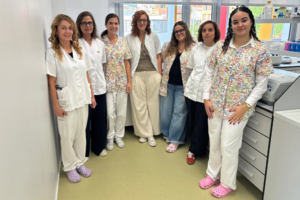
As part of the project, joint work has been carried out to standardise and harmonise the different sequencing techniques in order to establish common criteria among the participating centres.