
Artificial intelligence opens up a new avenue for improving the diagnosis of DNM1L-related diseases
The study AI-Based Mitochondrial Network Characterization as en Biomarker for DNM1L-Related Disease Diagnosis, led by researchers from the Neurometabolismo pediátrico: mecanismos de comunicación neuronal y terapias personalizadas del Institut de Sant Joan de Déu research group at the Institut de Recerca Sant Joan de Déu (IRSJD) and Universidad CEU Abat Oliva (UAO), has demonstrated the potential of artificial intelligence to identify characteristic alterations in the DNM1L network, associated with rare neurological disorders.
The study, published in the journal Advanced Intelligent Systems, proposes a new approach to support the interpretation of genetic variants and, in the future, help improve the diagnosis of these rare diseases.
What are DNM1L-related diseases?
DNM1L-related diseases are a very rare group of disorders that mainly affect the nervous system and neurological development. They are caused by alterations in this gene, which can have a wide range of consequences: from severe forms involving neurological impairment to other milder manifestations.
The DNM1L gene contains the instructions for producing the Drp1 protein, which is essential for regulating mitochondrial division and dynamics. Mitochondria are cellular structures responsible for producing much of the energy that cells need.
Mitochondria are not static structures: they form a network that is constantly reorganised. To function properly, they can join together and separate, a process that helps maintain them in good condition and distribute them wherever the cell needs energy. The Drp1 protein plays a fundamental role in this division process.
When DNM1L is altered, this mechanism may not function properly. This can modify the shape and organisation of the mitochondrial network and contribute to the development of the disease. The wide variety of clinical manifestations can also make it difficult to interpret new genetic variants and determine whether or not they are related to the disease.
A characteristic "fingerprint" of the mitochondrial network
The researchers analysed skin cells from patients with alterations in DNM1L and observed that, despite the variability in disease manifestations, their cells shared a characteristic pattern: a more elongated and interconnected mitochondrial network.
Using images obtained through confocal microscopy at the Unidad de Microscopía Confocal e Imagen Celular del Hospital Sant Joan de Déu Barcelona, the research team, in collaboration with the Unit's specialists, set out to characterise the mitochondrial network using artificial intelligence tools. The Unit contributed its expertise in advanced microscopy and was responsible for developing and applying artificial intelligence-based methods, which made it possible to identify patterns in mitochondrial organisation and distinguish the cells of patients with alterations in DNM1L from those of healthy individuals.
The results show that this approach can automatically identify complex visual patterns in the mitochondrial network. In particular, one of the artificial intelligence-based strategies achieved 77% accuracy in image classification.
"This research demonstrates that the morphology of the mitochondrial network may contain very valuable information for identifying a cellular signature associated with alterations in DNM1L. Combining advanced microscopy and artificial intelligence allows us to explore this information automatically and may, in the future, become a complementary tool to help interpret complex genetic variants," highlights Alfonso de Oyarzábal, lead author of the study and researcher in the Neurometabolismo pediátrico: mecanismos de comunicación neuronal y terapias personalizadas research group at the IRSJD and UAO.
A complementary tool to advance diagnosis
Currently, interpreting certain genetic variants remains one of the major challenges in diagnosing rare diseases. The results of this study provide proof of concept suggesting that automated analysis of the mitochondrial network could complement other functional studies when determining whether a variant in DNM1L is related to the disease, making it possible to advance or accelerate patient diagnosis. In the future, it could also be used as a tool to screen potential drugs that modulate the mitochondrial network, thereby advancing research into therapies for this condition.
However, the authors emphasise that these results will need to be validated in larger groups of patients and under different experimental conditions before this methodology can be applied in clinical practice.
The study highlights the potential of combining biomedical research, advanced microscopy technologies and artificial intelligence to move towards more accurate diagnoses of rare diseases.
Study reference:
AI-Based Mitochondrial Network Characterization as a Biomarker for DNM1L-Related Disease Diagnosis, publicat a Advanced Intelligent Systems. Leer el artículo científico: https://doi.org/10.1002/aisy.70601
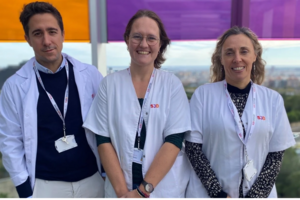
The researchers analysed skin cells from patients with alterations in DNM1L and observed that their cells shared a characteristic pattern.